
CASE STUDY
People-centred AI shift planning in the process industry
Algorithmic optimization with a “Manual Lock” for human intuition: planning effort fell from twelve hours a week to under a quarter of an hour — without tearing apart the well-drilled teams.
INDUSTRY
Chemical process industry (24/7)
SERVICES
Custom Web App, AI & Automation
TIMEFRAME
2024–2025 · 8 months
/01
The situation
A chemical process plant in continuous operation had to staff shifts around the clock across several hazardous control areas. Coordinating rest-period rules, mandatory certifications and the fluctuating availability of a large workforce was becoming an administrative feat — with high stress and compliance risks.
The planner had run the operation for fifteen years using a large physical wall board. Computationally inefficient, but it gave him room for social nuance: he knew which experienced operators worked well together, which mix of foremen and apprentices keeps the safety margin high, and which carpools and family arrangements had to be respected. Standard planning software erased these nuances and immediately met resistance.
/02
Our approach
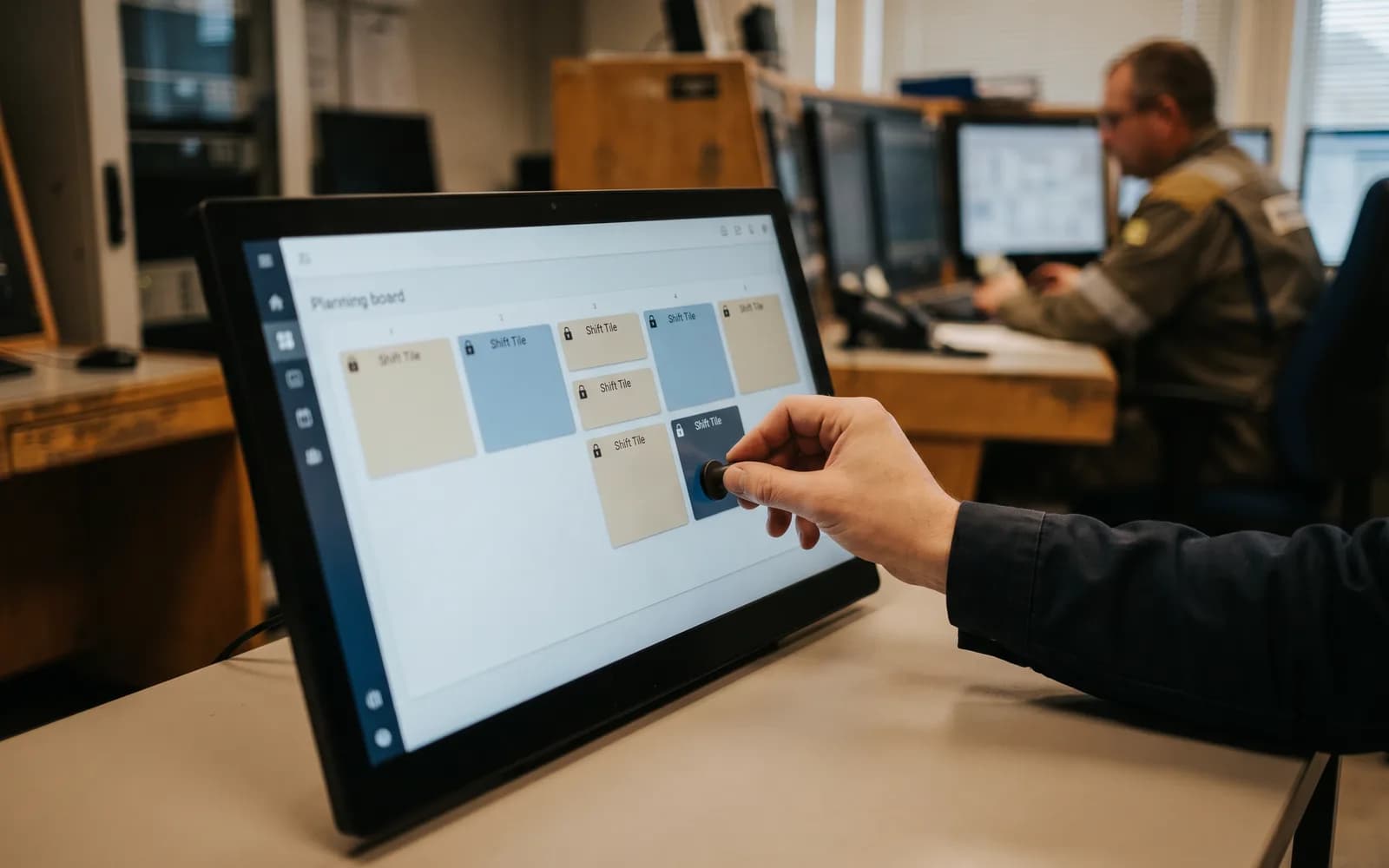
We built a bespoke web application that combines algorithmic optimization with human intuition. At its core was a strict “Manual Lock” in the interface: the planner could visually pin down his social team pairings and personal arrangements before the algorithm took over the rest.
As a two-person team, we developed the application on a modern open-source framework with a specialized optimization backend. The system evaluated millions of mathematical variants for working-time compliance, holiday balances and qualification coverage — but treated every manually set lock as an immovable constraint and optimized strictly around the planner's baseline.
/03
The outcome
The effort for shift preparation fell from twelve hours of manual board work per week to under a quarter of an hour of automated execution.
Because the well-drilled “buddy systems” and social chemistry on the production floor were preserved, the safety metrics stayed flawless.
Unplanned operator absence fell noticeably — an effect of higher satisfaction, because the planning continued to reflect their real lives.
YOUR PROJECT