
CASE STUDY
AI assistant for quality control in the packaging industry
Computer vision as an assistant, not a replacement: the system flags microscopic material defects, the inspectors keep the final word — and customer complaints dropped to zero.
INDUSTRY
Packaging industry (medical)
SERVICES
AI & Automation, Computer Vision, Workflow Integration
TIMEFRAME
2022–2023 · 11 months
/01
The situation
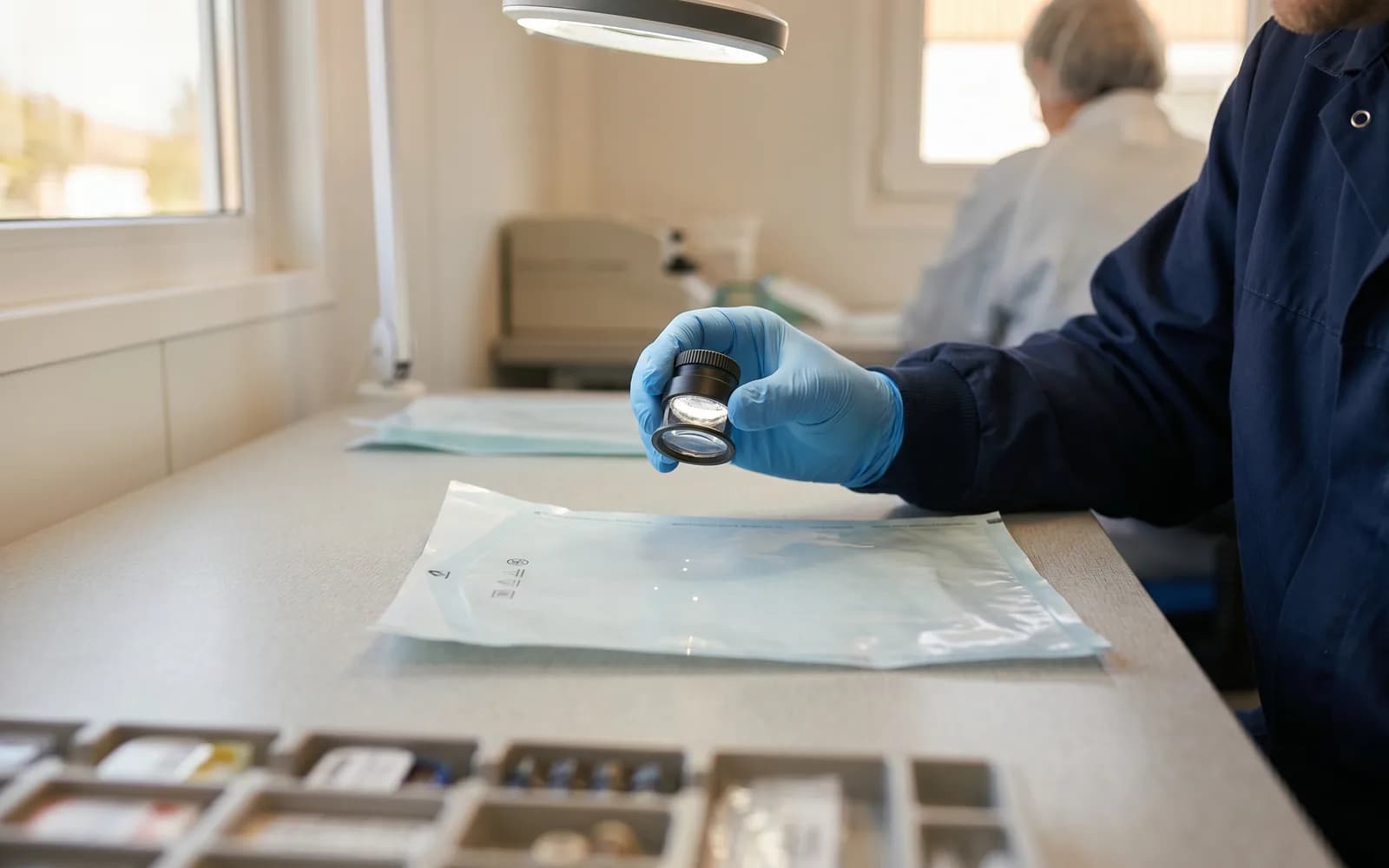
A high-speed plant for medical sterile-packaging films struggled with increasing microscopic material punctures. These tiny defects were barely visible to the naked eye but led to costly recalls once they reached the supply chain.
Quality assurance depended entirely on experienced human inspectors at fast visual-inspection lanes. In the long eight-hour shifts, fatigue predictably set in toward the end — and with it a statistically measurable rise in missed defects. Corporate IT proposed replacing the inspectors with a fully automatic AI reject system at the final checks.
/02
Our approach
We deliberately discarded the fully automatic model because it would have ignored the inspectors' wealth of experience. Instead, we built the computer-vision technology as an unobtrusive “AI quality assistant” — the human stayed at the centre of the process, with an unrestricted veto over every assessment the system made.
As a two-person team, we took on project management and workflow integration and worked with a specialized onshore provider for image processing. Above the production lanes, we installed high-resolution industrial line-scan cameras.
On a high-contrast monitor right at the workstation, a responsive web interface showed suspect areas: the model placed a blinking frame around possible anomalies in real time, which the inspector could confirm or dismiss instantly at the press of a button.
/03
The outcome
Customer-reported material defects dropped to zero — without the inspectors' experience disappearing from the process.
Eye and concentration strain on the inspectors eased noticeably, and the system's false alarms became far rarer because a human verified every anomaly.
Because the AI visibly extended human capability rather than replacing it, the workforce adopted it quickly.
YOUR PROJECT